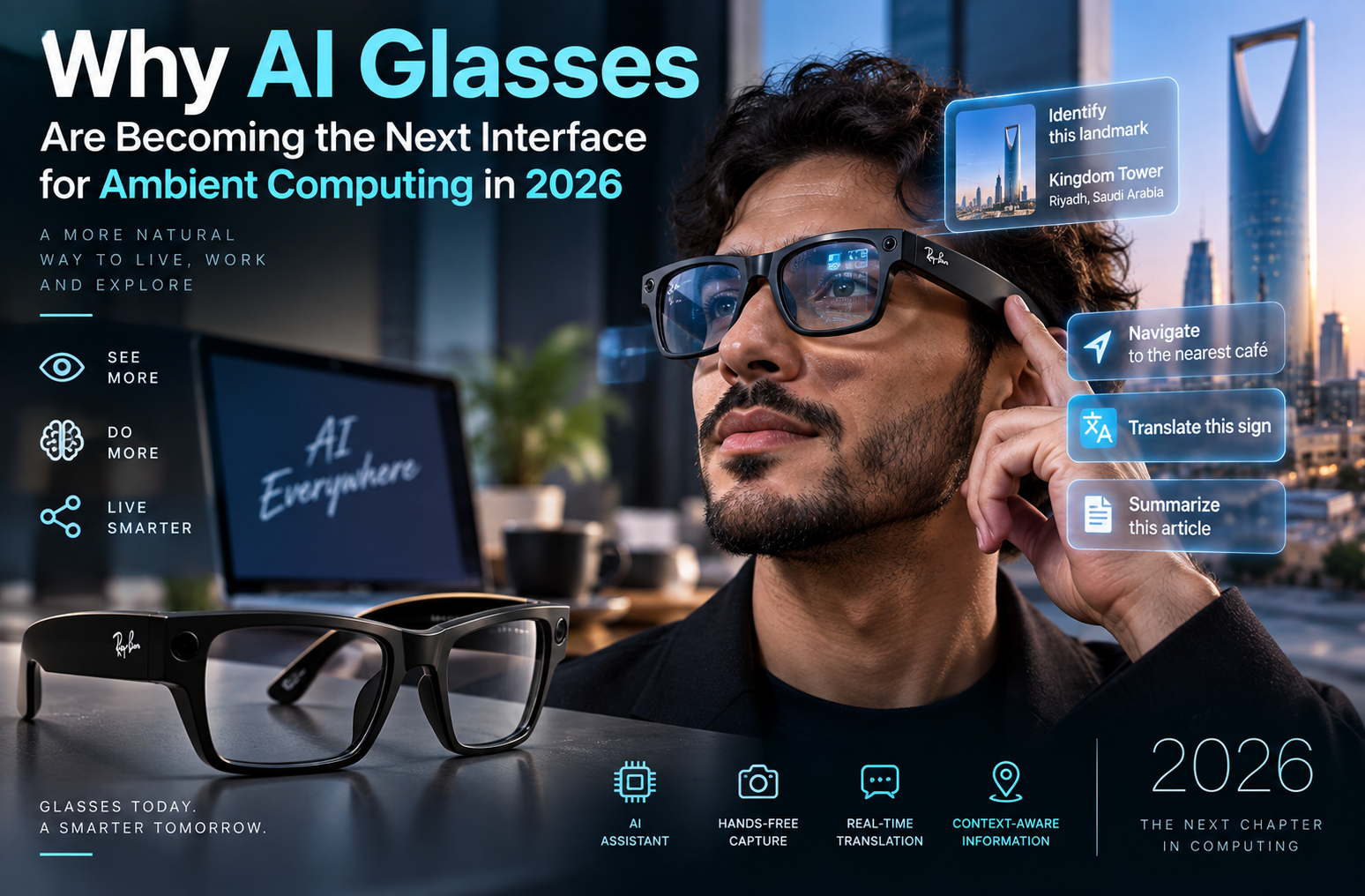
In 2026, smart glasses are moving beyond novelty status and into a more consequential role: becoming a persistent interface between people, AI assistants, and the physical world.
From wearable gadget to ambient interface
The defining idea behind the new generation of AI glasses is ambient computing: technology that can understand context and assist without forcing users to constantly reach for a phone.
Google is pushing Gemini into intelligent eyewear
Google is integrating Gemini and Android XR with intelligent eyewear, reflecting a broader shift toward contextual, hands-free computing.
Meta is trying to make AI glasses an everyday product
Meta has focused on conventional eyewear design while adding cameras, microphones, open-ear audio, translation and AI assistance.
The biggest advantage is context
Smart glasses can combine visual input, audio, location and conversation, giving AI assistants more awareness of the user's surroundings.
Privacy is the central challenge
The cameras and microphones that make AI glasses useful also create privacy concerns. Clear recording indicators, user controls and transparent sensing behavior will be critical.
The smartphone is not disappearing yet
Phones remain better for detailed visual work and precise touch interaction. A realistic near-term model is one in which phones provide core connectivity and apps while glasses become a fast contextual interface.
Conclusion
AI glasses in 2026 are becoming less about futuristic spectacle and more about practical ambient computing. Their success will depend on AI capability, privacy, trust, comfort and social acceptance.