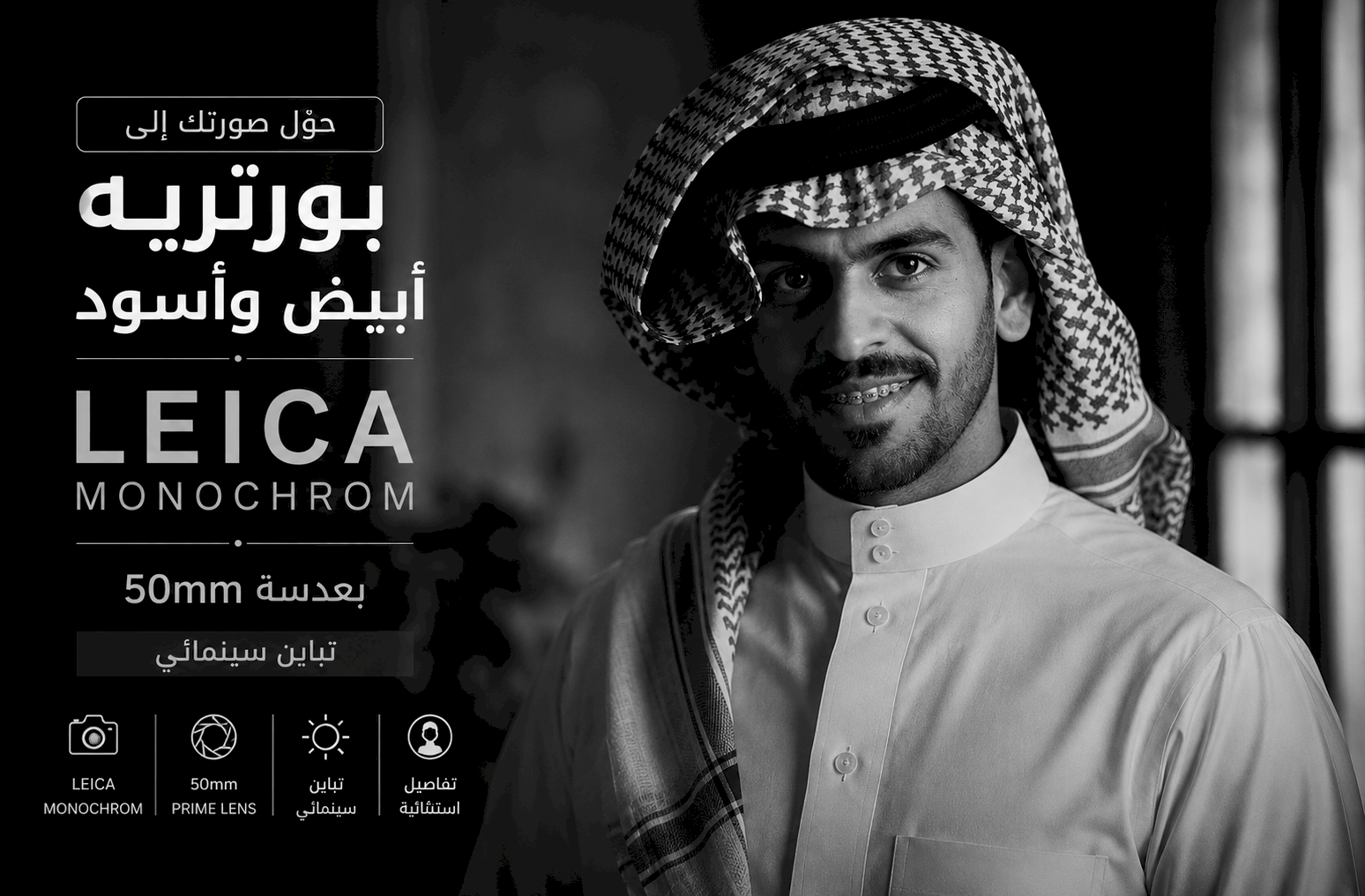
التصوير الأحادي الاحترافي لا يعني إزالة الألوان من الصورة فقط، بل يعتمد على الضوء والتباين ودرجات الرمادي وملمس البشرة لتكوين صورة قوية بصريًا. هذا البرومبت مصمم لتحويل صورتك إلى بورتريه أبيض وأسود مستوحى من شخصية تصوير Leica Monochrom، مع منظور عدسة 50mm وإضاءة جانبية طبيعية وتدرجات رمادية غنية تحافظ على ملامح الشخص الأصلية.
برومبت Leica Monochrom بعدسة 50mm
Transform the uploaded photo into an exceptionally realistic professional black-and-white portrait inspired by the distinctive photographic character of a Leica Monochrom camera paired with a premium 50mm prime lens.

Preserve the subject's exact identity and recognizable appearance.

Maintain the original facial anatomy, face shape, eyes, nose, lips, jawline, eyebrows, hairstyle, hairline, facial hair, skin characteristics, age, expression, body proportions, clothing, accessories, and every distinctive visible feature from the uploaded photograph.

The finished image must unmistakably depict the exact same person.

Do not beautify, redesign, reshape, age, de-age, replace, or artificially perfect the subject's face.

Do not simply desaturate the original image.

Reconstruct the photograph as a genuine monochrome photographic capture in which light, texture, tonal separation, exposure, and contrast have been conceived specifically for black-and-white photography.

Simulate the visual rendering of a professional Leica Monochrom-style full-frame monochrome sensor with exceptional luminance detail, extremely refined tonal transitions, high micro-contrast, broad grayscale separation, and natural photographic texture.

Use the perspective and optical behavior of a premium 50mm prime lens photographed around f/2.

Maintain a natural eye-level camera position and realistic photographer-to-subject distance.

Preserve physically believable facial proportions with the subtle dimensional perspective associated with a real 50mm lens.

Create shallow but restrained optical depth of field.

Keep both eyes and the essential facial plane naturally sharp while allowing the ears, shoulders, distant clothing, and background to transition progressively into gentle optical softness according to their actual distance from the focal plane.

Do not use artificial computational portrait blur.

Use one large natural-looking directional light source positioned approximately 45 degrees from the subject and slightly above eye level.

Allow this light to sculpt the forehead, eyes, cheekbones, nose, lips, jawline, neck, and clothing with strong dimensionality.

Keep the opposite side of the face darker while preserving meaningful information within the shadows.

Use extremely subtle reflected fill light to prevent completely blocked shadow areas.

The lighting should feel photographic and restrained rather than theatrical.

Create sophisticated monochrome tonal separation.

Render luminous but controlled highlights, detailed light-gray skin values, rich middle grays, deep charcoal shadows, and selectively near-black areas without losing important texture.

Preserve an extensive range of intermediate gray values between pure white and deep black.

Avoid flat gray conversion.

Avoid excessively crushed blacks and clipped white highlights.

Skin must retain extraordinary natural texture.

Preserve visible pores, fine facial lines, subtle complexion variations translated naturally into luminance, individual eyebrow hairs, eyelashes, beard and mustache texture when present, small facial hairs, realistic lips, and authentic skin reflectivity.

Never use beauty-filter smoothing, waxy skin, or artificial frequency-separation effects.

Render the eyes with exceptional monochrome detail.

Preserve natural iris patterns, pupil definition, realistic scleral texture, individual eyelashes, subtle lower-eyelid moisture, and physically accurate catchlights corresponding to the directional light source.

Hair must contain individually resolved strands, natural density, realistic directional texture, subtle highlight separation, and detailed shadow structure.

Maintain the original clothing exactly whenever possible.

Translate clothing colors into naturally separated monochrome tonal values so different fabrics and garments remain visually distinguishable.

Preserve textile fibers, stitching, seams, folds, wrinkles, buttons, embroidery, patterns, accessories, and realistic material response to directional light.

White garments must retain fabric detail rather than becoming featureless pure white.

Dark garments must preserve folds and textile information rather than collapsing into solid black.

Create refined Leica-inspired micro-contrast that emphasizes genuine optical detail around the eyes, hair, facial texture, and fabric without producing harsh digital sharpening or artificial halos.

Introduce extremely fine organic monochrome grain with irregular photographic distribution.

Grain should remain restrained and elegant, becoming slightly more perceptible in midtones and deeper shadows while remaining subtle across brighter facial areas.

Do not imitate heavily damaged vintage film.

Do not add scratches, dust, chemical stains, film borders, fake dates, or artificial light leaks.

Create a minimal, sophisticated background with gentle tonal gradients, understated architectural texture, a quiet interior, or a naturally subdued environmental setting appropriate to the original photograph.

The background must support the portrait without competing with the subject.

Use tonal separation and authentic optical depth rather than artificially cutting the person away from the background.

Composition should resemble a timeless fine-art editorial portrait.

Use eye-level framing, natural posture, authentic expression, deliberate negative space, balanced visual weight, and subtle asymmetry when appropriate.

Allow the image to communicate personality through facial expression, lighting, texture, and composition rather than through artificial props.

Maintain physically consistent illumination across the face, hair, neck, clothing, accessories, and background.

All shadows must correspond naturally to the position and size of the primary light source.

Preserve realistic highlight reflections on skin, eyes, hair, jewelry, glasses, buttons, and other reflective materials when present.

Avoid artificial HDR, plastic skin, excessive clarity, oversharpening, fake bokeh, glowing edges, exaggerated rim lighting, completely black shadows, blown highlights, flat grayscale conversion, excessive grain, artificial vintage damage, distorted facial features, altered identity, malformed hands, duplicated details, or obvious AI-generated artifacts.

Prioritize human authenticity, monochrome tonal richness, natural skin texture, optical realism, dimensional light, subtle imperfections, and timeless photographic restraint.

The final image should feel like a genuine high-resolution monochrome photograph captured by an experienced portrait photographer using a dedicated black-and-white camera rather than a color photograph converted to grayscale afterward.

Final result: ultra-photorealistic professional black-and-white portrait, Leica Monochrom-inspired photographic rendering, authentic 50mm prime lens perspective at approximately f/2, sophisticated grayscale separation, dimensional directional lighting, extraordinary skin and hair texture, precise natural eye focus, deep but detailed shadows, luminous controlled highlights, refined micro-contrast, subtle organic monochrome grain, timeless fine-art editorial composition, premium high-resolution photographic realism.
طريقة استخدام البرومبت
ارفع صورتك الأصلية إلى أداة ذكاء اصطناعي تدعم تعديل الصور، ثم انسخ البرومبت كاملًا وأرسله مع الصورة. للحصول على نتيجة أفضل، استخدم صورة عالية الدقة تظهر فيها ملامح الوجه والشعر والملابس بوضوح، لأن هذا الأسلوب يعتمد بصورة كبيرة على التفاصيل الدقيقة والتدرجات الضوئية.
ما الذي يميز التصوير الأحادي Monochrom؟
يركز هذا الأسلوب على معلومات الإضاءة والملمس والتباين بدل الاعتماد على الألوان للفصل بين عناصر الصورة. لذلك يوجه البرومبت النموذج إلى بناء المشهد منذ البداية كصورة أحادية، مع الاهتمام بالفروق الدقيقة بين الأبيض والرمادي والأسود.
لماذا تم اختيار عدسة 50mm؟
يوفر منظور 50mm توازنًا بين البورتريه والبيئة المحيطة، مع نسب طبيعية للوجه وإحساس قريب من المشاهدة البشرية. كما يسمح بإنشاء عزل بصري معتدل دون ضغط الخلفية بصورة كبيرة أو المبالغة في ضبابيتها.
التدرجات الرمادية بدل إزالة الألوان
من أهم عناصر البرومبت المحافظة على نطاق واسع من درجات الرمادي. فالملابس والبشرة والشعر والخلفية تحتاج إلى درجات مختلفة حتى لا تتحول الصورة إلى مساحات سوداء وبيضاء مسطحة، ولهذا يتم الحفاظ على التفاصيل داخل المناطق المضيئة والمظلمة في الوقت نفسه.
تفاصيل البشرة في الأبيض والأسود
يظهر ملمس البشرة بصورة أوضح عند غياب اللون، لذلك يمنع البرومبت التنعيم المبالغ فيه ويحافظ على المسام والشعيرات والخطوط الدقيقة والاختلافات الطبيعية في البشرة، مع تباين دقيق يساعد على إبراز التفاصيل دون جعل الوجه حادًا بصورة رقمية مصطنعة.
نصائح للحصول على أفضل نتيجة
- استخدم صورة أصلية عالية الدقة دون فلتر أبيض وأسود مسبق.
- اختر صورة واضحة تحتوي على تفاصيل جيدة في الوجه والعينين.
- يفضل أن تحتوي الصورة على إضاءة يمكن إعادة تشكيلها بصورة طبيعية.
- استخدم خيار الحفاظ على هوية الشخص إذا كان متوفرًا في الأداة.
- لا ترفع التباين أو الحدة في الصورة الأصلية قبل تطبيق البرومبت.
- اترك الألوان في الصورة الأصلية حتى يستطيع النموذج ترجمتها إلى درجات رمادية مختلفة.
النتيجة المتوقعة
ستحصل على بورتريه أحادي بتدرجات رمادية واسعة وظلال عميقة محتفظة بالتفاصيل وإضاءة جانبية تنحت ملامح الوجه بصورة طبيعية، مع منظور 50mm وملمس بشرة وشعر واقعي وحبيبات دقيقة، ليبدو الناتج كصورة بورتريه احترافية تم التقاطها خصيصًا بالأبيض والأسود.