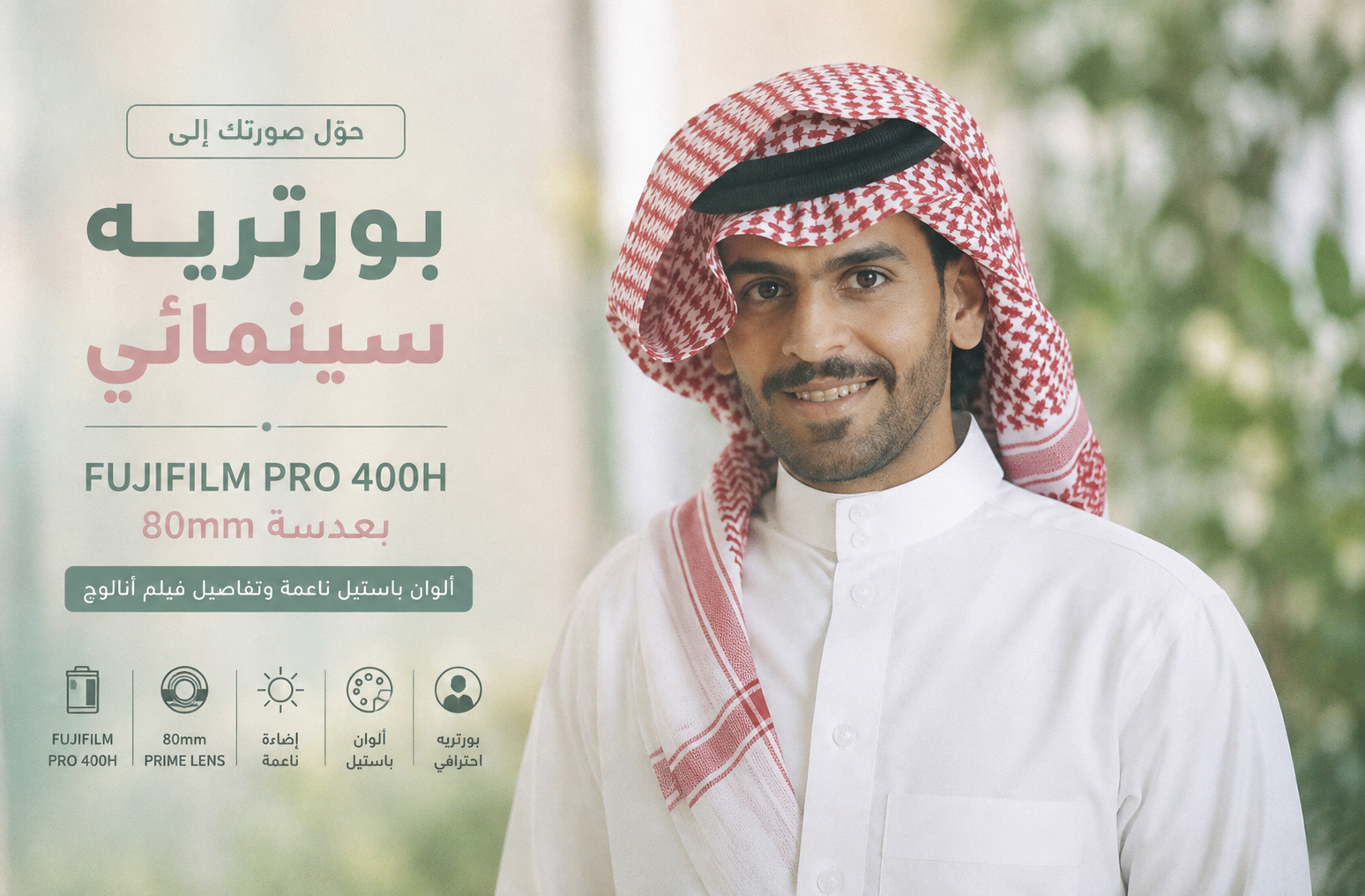
يتميز التصوير المستوحى من Fujifilm Pro 400H بألوانه الهادئة ودرجات الباستيل الرقيقة والبشرة الطبيعية، وهو طابع مختلف عن الأفلام ذات الدرجات الدافئة والقوية. صُمم هذا البرومبت لتحويل صورتك إلى بورتريه أنالوج احترافي بعدسة 80mm، مع إضاءة ناعمة وخلفية هوائية وحبيبات فيلم دقيقة، مع المحافظة على ملامح الشخص وهويته الأصلية.
برومبت Fujifilm Pro 400H بعدسة 80mm
Transform the uploaded photo into an exceptionally realistic professional analog portrait inspired by the distinctive visual character of Fujifilm Pro 400H color negative film, photographed with a premium 80mm portrait lens.

Preserve the subject's exact identity and recognizable appearance.

Maintain the original facial anatomy, face shape, eyes, nose, lips, jawline, eyebrows, hairstyle, hairline, facial hair, skin tone, age characteristics, expression, body proportions, clothing, headwear, jewelry, accessories, and every distinctive visible feature from the uploaded photograph.

The final photograph must unmistakably depict the exact same person.

Do not beautify, redesign, reshape, age, de-age, replace, or artificially perfect the subject's face.

Do not alter culturally significant clothing, headwear, accessories, or personal characteristics.

Reconstruct the image as if the subject had genuinely been photographed on professional Fujifilm Pro 400H color negative film rather than applying a digital preset or simple color filter.

Simulate the optical perspective of a premium 80mm full-frame-equivalent portrait lens photographed at approximately f/2.

Use a realistic photographer-to-subject distance and an eye-level camera position.

Maintain natural facial proportions with gentle portrait compression and refined dimensional separation between the subject and environment.

Keep both eyes and the essential facial plane precisely focused.

Allow focus to transition naturally through eyelashes, ears, hair, shoulders, clothing, foreground elements, and background according to their actual physical distance from the focal plane.

Create smooth optical background separation produced by genuine shallow depth of field.

Do not imitate smartphone portrait-mode segmentation.

Background blur must contain progressive depth and believable optical characteristics rather than uniform artificial softness.

Use large, soft natural daylight as the primary illumination.

Create the feeling of an overcast morning, open shade, a bright window, or sunlight diffused through a large translucent surface.

The light should wrap gently around the face and produce extremely soft transitions across the forehead, eyes, cheekbones, nose, lips, jawline, neck, and clothing.

Avoid harsh directional shadows.

Use natural environmental bounce as subtle fill illumination.

Maintain enough dimensional contrast to preserve facial structure without making the portrait flat.

Reproduce the airy pastel color character associated with professional Fuji-style color negative portrait film.

Use restrained mint-leaning greens, delicate cyan-blue shadows, creamy whites, pale neutral highlights, soft earth tones, muted reds, gentle pinks, and naturally luminous skin.

Keep saturation refined and slightly restrained.

Do not turn the entire image green, cyan, pink, or faded.

Skin tone accuracy is the highest color priority.

Preserve the subject's original complexion and natural undertones.

Translate different skin tones individually rather than forcing every subject toward pale pink or peach.

Illuminated skin should appear luminous and natural, while shaded skin may contain extremely subtle cooler tonal separation.

Create exceptionally smooth transitions between these areas.

Preserve the generous highlight latitude associated with professional color negative film.

Bright skin, white clothing, windows, sky, reflective objects, and other highlights should transition gradually toward brightness.

Never clip important highlights abruptly.

White garments must retain visible textile fibers, folds, stitching, embroidery, seams, and subtle tonal information.

Maintain detailed, open shadows.

Avoid crushed blacks.

Deep shadow regions should contain believable color and texture while still preserving a natural photographic black point where appropriate.

Render skin with exceptional realism.

Preserve natural pores, fine facial hairs, subtle complexion variations, freckles when present, fine lines, eyebrow hairs, individual eyelashes, beard and mustache texture when present, natural lips, and authentic skin reflectivity.

Do not use beauty-filter smoothing.

Do not produce waxy skin, plastic retouching, excessive clarity, artificial makeup, or unrealistic facial perfection.

Render the eyes with precise iris structure, natural pupil definition, authentic scleral texture, individual eyelashes, subtle moisture, and physically accurate catchlights derived from the large soft light source.

Do not artificially brighten or recolor the eyes.

Hair must contain individually resolved strands, natural density, subtle flyaway hairs, realistic highlight separation, believable shadow texture, and natural interaction with soft ambient illumination.

Preserve the subject's original clothing and accessories whenever possible.

Render fabrics with realistic fibers, stitching, seams, folds, wrinkles, buttons, embroidery, patterns, and material-specific light response.

Translate clothing colors into the pastel film palette without changing their fundamental original color identity.

Introduce extremely fine organic ISO 400 color-negative film grain.

Grain must have irregular photographic distribution rather than uniform digital noise.

Allow slightly more visible grain in midtones and deeper tonal regions while maintaining comparatively smooth bright skin and highlights.

Include microscopic chromatic grain variation that contributes to authentic scanned-film texture without becoming visually distracting.

Apply very subtle analog softness to extremely fine high-frequency details while maintaining strong perceived sharpness around the eyes, eyelashes, facial hair, hair strands, and important textile features.

Avoid aggressive digital sharpening and artificial halos.

Use refined micro-contrast rather than excessive global contrast.

Introduce only extremely subtle halation around genuinely intense highlights when physically appropriate.

Do not create obvious glowing outlines, decorative light leaks, fake sun flares, scratches, dust, chemical stains, film borders, dates, or damaged-film artifacts.

Create a light, understated environment that complements the pastel color response.

Suitable backgrounds may include softly illuminated architecture, pale neutral interiors, greenery in open shade, a quiet garden, bright urban surroundings, or another believable environment compatible with the uploaded photograph.

Keep the background visually calm and subordinate to the subject.

Use natural environmental colors rather than artificially matching every object to the pastel palette.

Composition should resemble a professionally photographed fine-art lifestyle portrait.

Use balanced negative space, authentic posture, natural expression, elegant headroom, careful visual weight, and subtle asymmetry when appropriate.

The portrait should feel polished yet relaxed rather than rigidly staged.

Maintain complete physical consistency between facial illumination, clothing illumination, background exposure, reflections, shadow softness, depth of field, bokeh, and environmental light.

Everything should appear to have existed during one real photographic exposure.

Avoid artificial HDR, heavy orange-and-teal grading, excessive saturation, strong green casts, washed-out blacks, plastic skin, fake computational blur, extreme bokeh, glowing subject outlines, excessive film grain, heavy vintage damage, artificial light leaks, distorted facial features, altered identity, malformed hands, duplicated details, or obvious AI-generated artifacts.

Prioritize exact identity preservation, authentic human appearance, luminous natural skin, airy pastel color separation, soft photographic light, realistic optical depth, fine analog texture, restrained contrast, and professional portrait composition.

The finished photograph should feel like a high-resolution professional lab scan from a carefully exposed frame of premium pastel-toned ISO 400 color negative portrait film.

Final result: ultra-photorealistic Fujifilm Pro 400H-inspired professional portrait, authentic 80mm portrait lens perspective at approximately f/2, precise natural eye focus, smooth optical background separation, large soft daylight illumination, luminous accurate skin tones, airy pastel palette, delicate mint greens and cyan-blue shadows, creamy highlight roll-off, open detailed shadows, fine organic ISO 400 grain, subtle analog softness, elegant lifestyle composition, premium high-resolution scanned-film realism.
طريقة استخدام البرومبت
ارفع صورتك الأصلية الملونة إلى أداة ذكاء اصطناعي تدعم تعديل الصور، ثم انسخ البرومبت كاملًا وأرسله معها. للحصول على أفضل نتيجة، استخدم صورة عالية الدقة وواضحة دون فلاتر أو تعديل لوني قوي مسبق، حتى يستطيع النموذج التعرف على درجات البشرة والملابس والإضاءة الأصلية قبل إعادة بناء الطابع الفيلمي.
ما الذي يميز أسلوب Fujifilm Pro 400H؟
يعتمد هذا الطابع على الألوان الهادئة والانتقالات الناعمة والدرجات الفاتحة، مع حضور لطيف للأخضر والـCyan في البيئة والظلال دون التأثير السلبي في لون البشرة. والهدف هو الحصول على صورة مشرقة وهوائية بدل المظهر السينمائي الداكن أو الألوان المشبعة بقوة.
لماذا عدسة 80mm؟
يمنح منظور 80mm توازنًا مناسبًا للبورتريه، فهو يوفر ضغطًا بصريًا لطيفًا للوجه مع إبقاء جزء كافٍ من البيئة المحيطة داخل التكوين. كما يساعد استخدام فتحة قريبة من f/2 على فصل الشخص عن الخلفية بطريقة ناعمة دون تحويل البيئة إلى تمويه مبالغ فيه.
ألوان الباستيل الطبيعية
لا يعتمد البرومبت على وضع فلتر أخضر أو باهت فوق الصورة، بل يوجه النموذج إلى معالجة كل مجموعة لونية بصورة مستقلة. تبقى البشرة قريبة من لونها الأصلي، بينما تصبح الخضرة أكثر هدوءًا والظلال أبرد قليلًا والمناطق البيضاء كريمية وناعمة.
الإضاءة الناعمة
تم اختيار إضاءة كبيرة ومنتشرة لتتناسب مع طبيعة هذا الأسلوب، بحيث تلتف حول ملامح الوجه بدل تكوين ظلال حادة. ويساعد ذلك على إظهار البشرة والملابس بتدرجات ناعمة مع الاحتفاظ بالتفاصيل الدقيقة والمظهر الطبيعي.
حبيبات الفيلم
يضيف البرومبت حبيبات ISO 400 دقيقة وغير منتظمة بدل Noise رقمي موحد. وتظهر الحبيبات بدرجة أكبر قليلًا في الدرجات المتوسطة والظلال، بينما تبقى المناطق المضيئة والبشرة ناعمة نسبيًا، لتقترب النتيجة من مظهر مسح ضوئي احترافي لفيلم حقيقي.
نصائح للحصول على أفضل نتيجة
- استخدم صورة أصلية ملونة وعالية الدقة.
- تجنب الصور التي تحتوي على فلاتر قوية مسبقًا.
- اختر صورة تظهر فيها العينان وملامح الوجه بوضوح.
- استخدم خيار الحفاظ على هوية الشخص إذا كانت الأداة توفره.
- لا تضف تمويهًا للخلفية قبل تطبيق البرومبت.
- يفضل استخدام صورة ذات إضاءة متوازنة حتى يتمكن النموذج من إعادة تشكيلها بصورة طبيعية.
النتيجة المتوقعة
ستحصل على بورتريه احترافي ناعم ومشرق بدرجات باستيل هادئة وبشرة طبيعية، مع منظور 80mm وعزل بصري تدريجي وإضاءة منتشرة وحبيبات فيلم دقيقة. والهدف أن تبدو الصورة كأنها التقطت على فيلم بورتريه احترافي ثم جرى مسحها ضوئيًا بدقة عالية، وليس كصورة رقمية أضيف إليها فلتر جاهز.