Why Passwordless Authentication Is Becoming the Future of Online Security
For decades, passwords have been the primary way to protect online accounts. However, weak passwords, password reuse, phishing attacks, and large-scale data breaches have shown that traditional authentication is no longer enough. As a result, the technology industry is rapidly moving toward passwordless authentication.
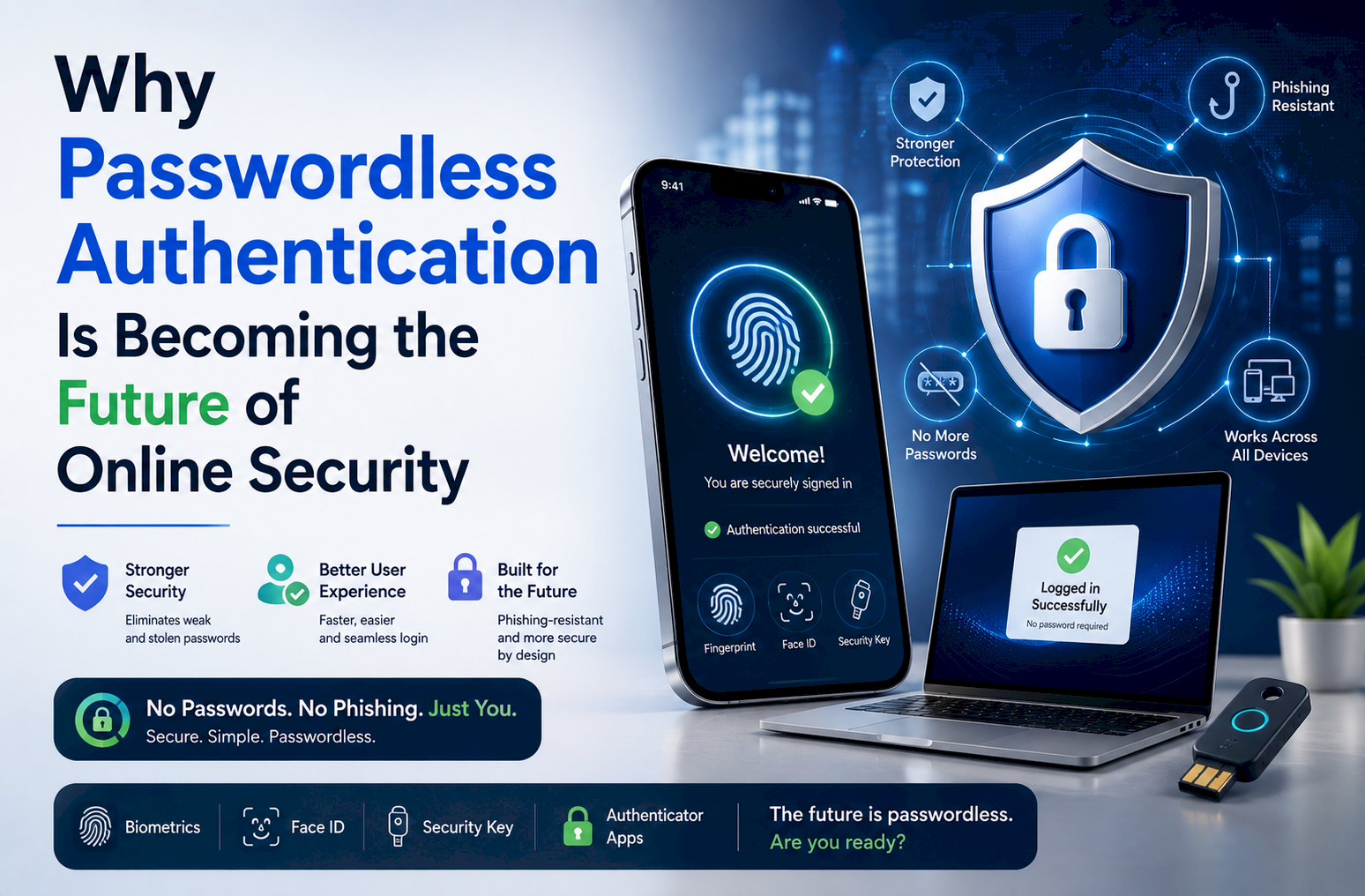
Passwordless authentication allows users to sign in without typing a traditional password. Instead, authentication relies on secure cryptographic keys stored on trusted devices and verified using biometrics such as fingerprints or facial recognition.
What Is Passwordless Authentication?
Passwordless authentication replaces passwords with secure credentials that are stored locally on a user's device. These credentials cannot simply be copied or stolen like traditional passwords, making them significantly more secure.
How Passkeys Work
- A website creates a unique cryptographic key pair.
- The private key remains securely stored on your device.
- The public key is stored by the online service.
- When you sign in, your device proves ownership of the private key after biometric verification or device PIN confirmation.
Main Benefits
- Protection against phishing attacks.
- No passwords to remember.
- Faster login experience.
- Reduced risk of credential theft.
- Improved user convenience across devices.
Which Platforms Support Passkeys?
- Apple (iPhone, iPad, and Mac)
- Google (Android and Chrome)
- Microsoft (Windows and Edge)
- Many major websites and cloud services supporting FIDO standards.
Potential Limitations
- Older devices may not support passkeys.
- Some websites still rely on passwords.
- Users should configure account recovery methods in case a device is lost.
Best Practices
- Enable passkeys whenever available.
- Keep your operating system updated.
- Protect your device with biometrics or a strong PIN.
- Review trusted devices regularly.
- Maintain secure recovery options for important accounts.
The Future of Authentication
As more organizations adopt passwordless technologies based on FIDO2 and WebAuthn standards, passwords are expected to become increasingly uncommon. The combination of stronger security and a simpler user experience makes passwordless authentication one of the most significant cybersecurity improvements of the decade.
Conclusion
Passwordless authentication is more than just a convenience—it represents a major shift in digital security. By eliminating traditional passwords and relying on cryptographic authentication, users gain stronger protection against modern cyber threats while enjoying faster and more seamless access to their online accounts.